Botox for Forehead Wrinkles: What to Know
Botox for forehead wrinkles temporarily relaxes the muscle that creates the fold, not the fold itself. Here is what it actually does, what it doesn't, and how it differs from filler.

Botox for forehead wrinkles temporarily relaxes the frontalis, the muscle that raises your eyebrows, so it stops folding the skin above it as hard. It does not add volume, it does not work instantly, and the effect fades over months, which is the opposite of what a lot of people assume walking in.
What Botox actually does
The frontalis is the muscle across your forehead that lifts your eyebrows. Every time it contracts, it folds the skin above it, and that repeated fold is what eventually becomes a visible line. Botox is a purified form of botulinum toxin that, injected in small amounts into that muscle, temporarily blocks the nerve signal telling it to contract.
With the muscle unable to contract as forcefully, the skin above it stops folding the same way. No fold, no line forming from that movement. That's the entire mechanism: it works on the muscle, not on the skin, and not on the wrinkle directly.
This is also why it only works on dynamic lines - the ones that appear when you move your face. A deep static line that's visible even at rest is a structural change in the skin itself, and relaxing the muscle underneath it can soften how it looks but won't erase it the way it softens a purely dynamic line.
What it doesn't do
A few expectations worth correcting before anyone looks into this seriously:
- It doesn't add volume. Botox removes the muscle movement that causes a fold. It cannot fill a line, plump a hollow, or restore lost volume anywhere on the face. That is a completely different category of treatment, which is the next section.
- It isn't instant. Most people see the earliest effect at 3 to 5 days, with the full result settling in at around 10 to 14 days. Anyone expecting a visible change walking out of the appointment is going to be disappointed, not because the treatment failed but because that isn't how the mechanism works.
- It doesn't last forever. The effect typically runs 3 to 4 months before the muscle regains its normal movement and the treatment needs to be repeated. This is routine maintenance, not a one-time fix.
- It doesn't stop new lines from ever forming elsewhere. It only relaxes the specific muscle it's injected into. A forehead treatment does nothing for lines caused by other muscles.
How this is different from filler
Botox and filler get confused constantly because both are injectable and both are used on the face, but they solve opposite problems.
- Botox relaxes a muscle. It's the right category for lines caused by repeated movement - forehead lines, the "11" lines between the brows, crow's feet - because the problem is motion, and the fix is reducing that motion.
- Filler adds volume. It's the right category for areas that have lost structure or never had much to begin with - lips, cheeks, under-eye hollows, deep static folds - because the problem is a lack of material, and the fix is adding some back, typically with hyaluronic acid.
Static forehead lines sometimes get a very small amount of filler laid into the groove itself, on top of Botox in the muscle - but that's a combination approach a provider decides on case by case, not a substitute for either treatment on its own.
What a realistic timeline looks like
Most people who go through with it report something close to this pattern: a consultation to assess the muscle and the lines, the injections themselves (typically a few minutes), no visible change for the first few days, the effect building over the following one to two weeks, and then roughly three to four months of reduced movement before it gradually returns to normal and the lines start reappearing with repeated expression.
Mild bruising or a temporary headache at the injection site are the most commonly reported side effects, and both are normally short-lived. Anything beyond that, including the rarer risk of a drooping eyebrow if the product affects nearby muscles, is exactly the kind of thing a licensed provider screens for before treating anyone - which is why this is a conversation to have with a professional, not something to decide from an article.
Is it worth it
That depends entirely on where someone's lines actually are in the dynamic-to-static process, and that's genuinely hard to judge from memory or from a bathroom mirror under bad lighting. A line that only shows up mid-expression is a different decision than one that's visible with a relaxed face, and the honest answer for most people sits somewhere they haven't actually looked closely at.
Seeing it before deciding anything
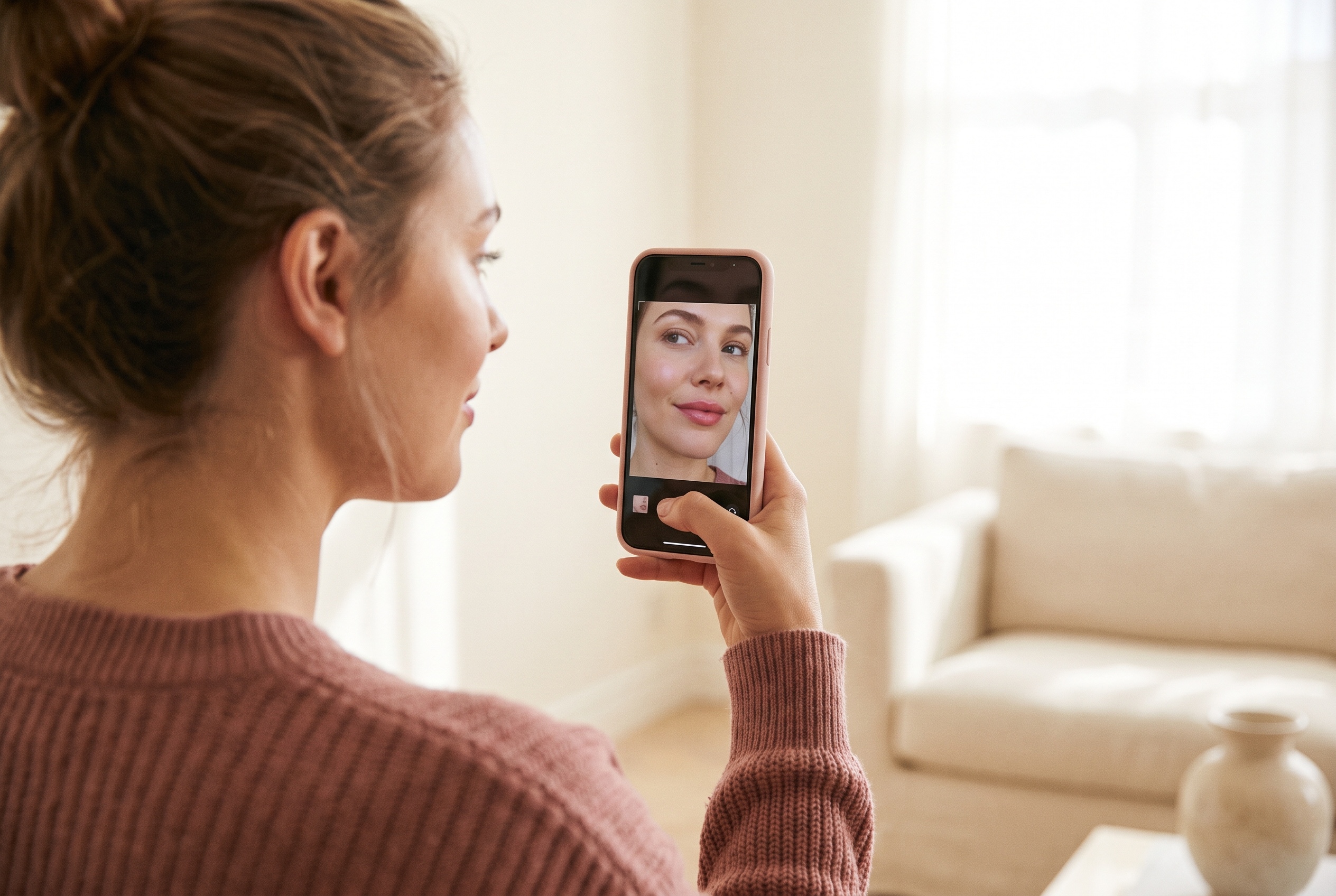
The hardest part of this decision usually isn't understanding the mechanism, it's not knowing what smoother would actually look like on your own face before committing to anything. LipsUp lets you see a computer-generated visualization of smoother forehead lines on your own selfie, so you have a concrete picture to compare against instead of guessing. Your photo stays on your device - only the forehead area is processed. For more on how the lines themselves form in the first place, see why forehead wrinkles appear.
Always consult a licensed professional before any cosmetic treatment.
QUESTIONS
Frequently asked
How long does Botox for forehead wrinkles last?
The effect typically lasts 3 to 4 months before the frontalis muscle regains its normal movement and the lines start reappearing with repeated expression. It needs to be repeated to maintain the result, it isn't a one-time fix.
Is Botox the same as filler?
No. Botox relaxes the muscle that causes a fold, which is the right fix for lines from repeated movement. Filler adds volume to areas that have lost structure, like lips or hollow cheeks. They solve opposite problems and aren't interchangeable.
How soon does Botox for forehead wrinkles start working?
Most people notice the earliest effect around 3 to 5 days after the injections, with the full result settling in by about 10 to 14 days. It is not visible immediately after the appointment.