How Long Does Botox for the Forehead Really Last?
Botox for forehead wrinkles generally lasts three to four months, though the real range runs from about two to six months depending on the person. It does not wear off on a fixed schedule, and understanding the realistic timeline matters more than chasing an exact number.

Botox for forehead wrinkles generally lasts three to four months before the muscle regains its full range of movement, though the real range runs anywhere from about two to six months depending on the person. It does not wear off on a fixed schedule, and it does not stop working all at once.
How long does Botox for the forehead actually last?
Three to four months is the range most commonly cited specifically for the forehead, which tends to soften a little faster than areas with less active movement, because the frontalis muscle is used almost constantly to raise the eyebrows. Some people see the first signs of movement returning closer to the two-month mark, others still have a smooth forehead at five or six months. There is no single correct number, and nobody can tell you your exact timeline in advance, including someone else's before-and-after photo.
How soon does it start working?
Botox does not take effect immediately. Most people notice the first subtle change within three to five days, with the fuller effect developing over the following one to two weeks. If a forehead looks completely unchanged after a day or two, that is normal and not a sign anything went wrong. Full effect, and the right moment to judge the actual result, generally sits around two weeks after treatment.
What determines how long it lasts?
Four things drive most of the variation people see:
- Muscle strength. A frontalis that contracts frequently and strongly, raising the eyebrows a lot, tends to work through the effect faster than a quieter one.
- Metabolism. People with a faster metabolism commonly report the effect fading sooner, broadly in line with how the body processes many other things at different rates.
- Dose. A higher dose generally buys more time before movement returns, which is one reason a provider may ask about expression habits before treatment rather than using one default amount for everyone.
- Repeated use over time. Many people who treat the same area regularly report the gap between sessions stretching out after a few rounds, often explained by the muscle weakening slightly from disuse. This is widely discussed, not a guarantee, and it varies from person to person.
None of these factors work in isolation. A higher dose paired with a quieter muscle can push the upper end of the range past six months, while a strong, expressive frontalis treated at a lower dose can start moving again well before the three-month mark. This is also why two people who get what looks like the same treatment can report different timelines without either of them doing anything wrong.
What does "wearing off" actually look like?
It is not a cliff. Botox does not work perfectly for twelve weeks and then stop on day eighty-four. Movement returns gradually: a small amount of eyebrow motion comes back first, often noticeable only to the person who had the treatment. Over the following weeks, the range of movement keeps expanding, and the lines start showing at rest again in the same gradual way they first appeared, not overnight. By the time most people decide to book another session, the muscle has usually already returned to close to its full range.
Why does the forehead fade faster than some other areas?
The forehead is one of the more expressive parts of the face, which is exactly why it is a common place to start. Areas like the space between the eyebrows (the "11 lines") or crow's feet near the eyes are driven by smaller, less constantly used muscles, so the same dose can sometimes last closer to the upper end of the typical range there. The frontalis, by contrast, is involved in a wide range of everyday expressions, from surprise to concentration, which is part of why forehead results are often reported as softening a little earlier than other treated areas - not because anything went wrong, but because the muscle underneath is simply busier.
This also explains why "how long does Botox last" rarely has one universal answer even for the same person treated by the same provider twice. The forehead and the area between the brows are often treated in the same session but can fade at slightly different rates, because they are different muscles doing different amounts of work.
Does repeating it change how long it lasts?
This is one of the more debated questions in the field, and nobody can promise a specific outcome. What is widely discussed is that consistent, regular treatment of the same muscle over months or years is associated with the muscle gradually weakening, which some people experience as longer intervals between sessions. That is a pattern reported anecdotally and discussed by practitioners, not a fixed rule that applies to everyone, and it is not a reason to decide for yourself without a professional's input.
Seeing a realistic picture before deciding
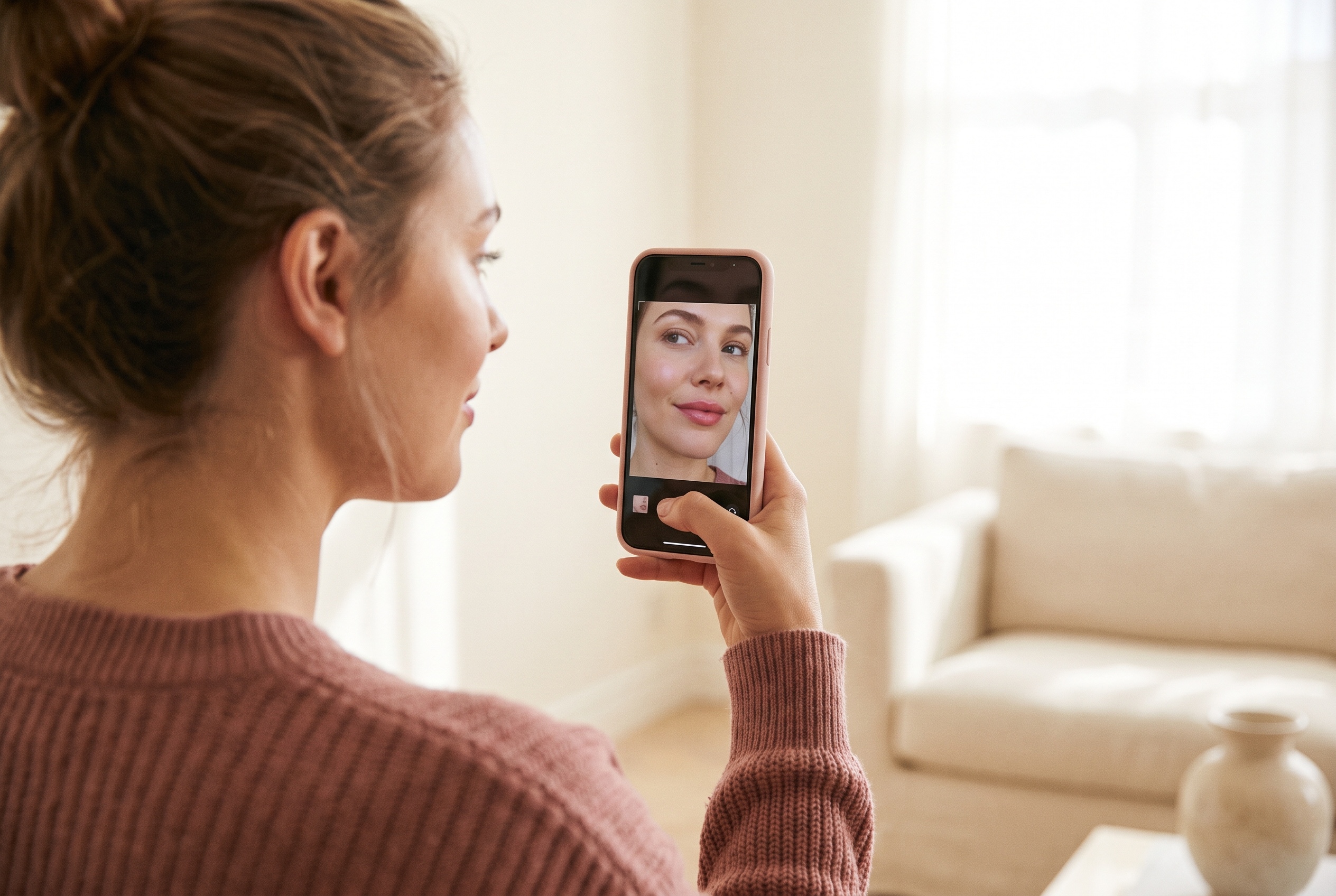
None of this answers the question most people actually have before a first appointment: what smoother would feel like on their own forehead. LipsUp does not simulate how long a result would last, because that depends on individual factors a photo cannot show. What it can do is show a computer-generated visualization of smoother forehead lines on your own selfie, a single preview rather than a timeline, so there is a concrete picture to bring into a real conversation instead of guessing from someone else's before-and-after. Your photo stays on your device - only the forehead area is processed.
Always consult a licensed professional before any cosmetic treatment. They can assess your specific muscle strength, give an honest estimate for your case, and advise on dosing and scheduling - none of which a blog post or a preview can replace.
QUESTIONS
Frequently asked
How long does Botox for the forehead typically last?
Most people see the effect last around three to four months, though the real range runs from about two to six months depending on muscle strength, metabolism, and dose. There is no fixed number, and it fades gradually rather than on a set schedule.
Does Botox wear off gradually or all at once?
Gradually. A small amount of movement returns first, usually noticeable only to the person who had the treatment, and the range keeps expanding over the following weeks. It does not work perfectly and then stop on a single day.
Can repeating Botox treatments make it last longer?
Many people who treat the same area regularly report longer gaps between sessions over time, often linked to the muscle weakening slightly from disuse. This is widely discussed but not guaranteed, and a licensed professional is the right person to ask about your specific case.