Why You're Getting Forehead Wrinkles (And What Actually Helps)
Forehead wrinkles do not appear overnight. They start as expression lines that only show when you move your face, and become visible at rest once the movement repeats enough times. Here is the actual mechanism.

Forehead wrinkles start as dynamic lines that only appear when you raise your eyebrows or frown, and become visible at rest once that movement has repeated often enough to leave a permanent crease. The two main causes are repeated muscle movement and the skin's declining ability to bounce back from it, and both are things you can actually see on your own forehead before deciding anything about them.
Why forehead lines form in the first place
Every time your frontalis muscle (the one that raises your eyebrows) contracts, it folds the skin above it. In your twenties, skin has enough collagen and elastin to spring back flat the moment the muscle relaxes. The fold leaves nothing behind.
That changes gradually, not suddenly. Collagen production slows years before anyone notices it in the mirror, and each repetition of the same expression asks slightly more of skin that is slightly less elastic than it was. The fold stops fully releasing. What was a line that only showed when you looked surprised becomes a line that is there when your face is doing nothing at all.
- Repetition matters more than age. Someone who raises their eyebrows constantly (a habit, a job that involves a lot of expressive talking, squinting without sunglasses) can see lines earlier than someone older who doesn't.
- Sun exposure accelerates collagen loss, independent of the muscle movement itself.
- Genetics set the starting elasticity, which is why two people with identical habits age differently.
Why some people get them in their 20s and others don't until their 40s
This is less about age and more about how expressive a face is and how much UV it has seen. A habitually raised-eyebrow expression, repeated daily for years, does the same mechanical work regardless of whether the person is 24 or 44. The timeline shifts based on repetition and skin elasticity, not a birthday.
Dynamic vs static: what the difference actually tells you
Dynamic lines only show when you move - they disappear completely when your face is at rest. Static lines are visible all the time, including with a relaxed expression.
That distinction matters because it is the single clearest signal of where a forehead actually is in this process. Dynamic-only lines are the earliest stage and the one where prevention has the most room to work. Static lines mean the crease has set, and at that point the conversation shifts from prevention to what helps now.
What actually helps
- Sunscreen on the forehead specifically, not just the rest of the face - it is one of the few interventions with real evidence behind it, because UV damage to collagen is cumulative and largely preventable.
- Not squinting - wearing sunglasses outdoors removes one of the more common repeated-contraction triggers nobody thinks about.
- Retinoids, which have decent evidence for stimulating collagen over months of consistent use, though results are gradual and modest compared to a procedure.
- Botox for forehead wrinkles is the most common in-office option people research, because it works directly on the repeated muscle contraction rather than trying to repair the skin after the fact. It temporarily relaxes the frontalis so the fold stops forming - it does not add volume or remove the line retroactively, which is a different mechanism from filler.
None of this is medical advice, and whether any of it is right for a specific forehead is a conversation for a licensed professional, not a blog post.
Seeing it before deciding anything
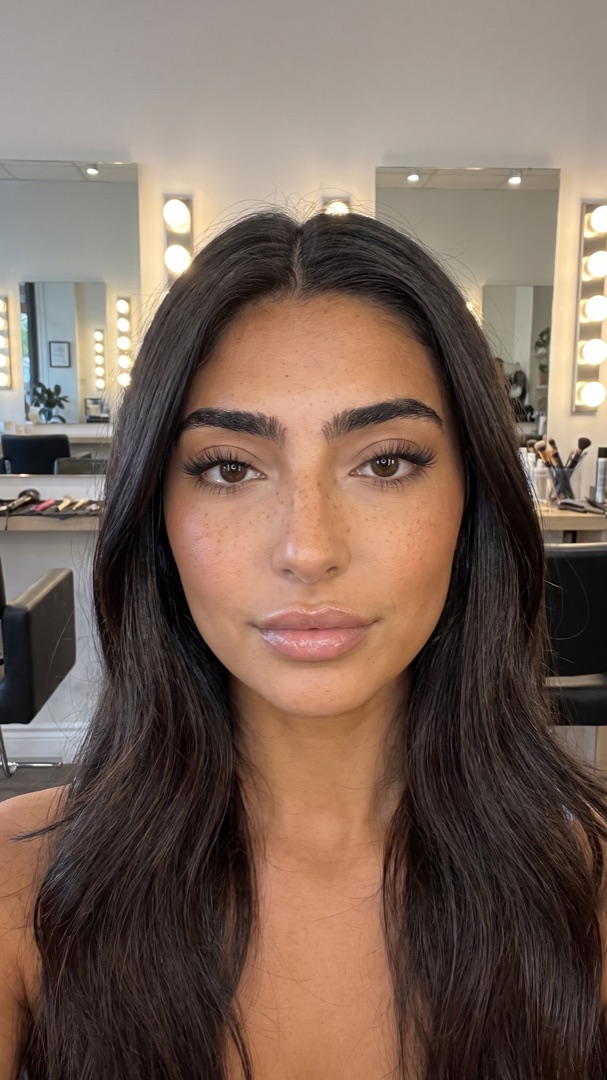
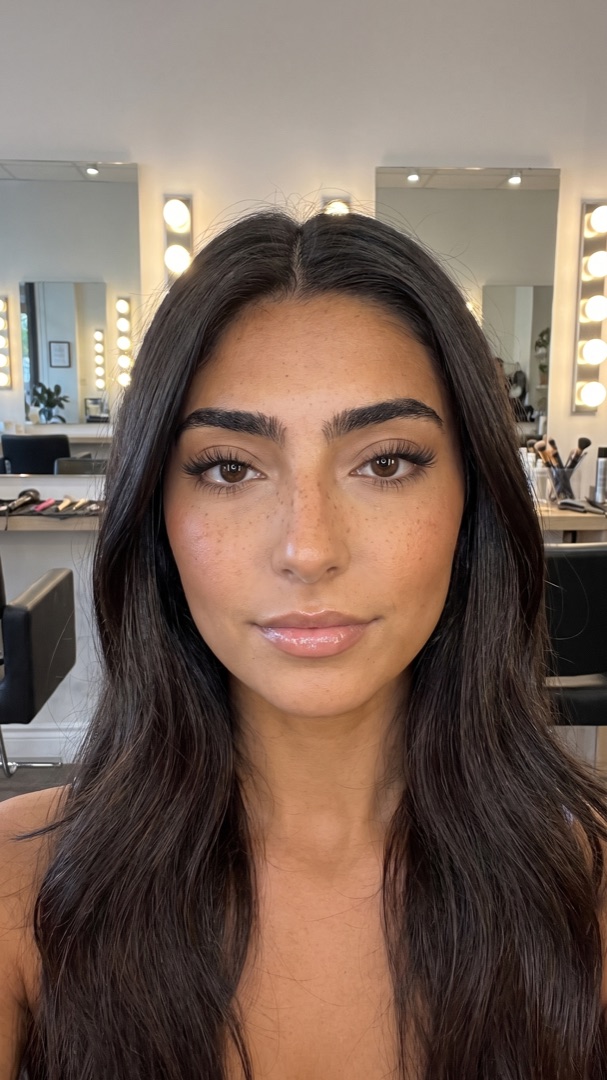
Most of the uncertainty around forehead wrinkles isn't really about the mechanism - it's about not knowing what smoother actually looks like on your own face before committing to anything. LipsUp lets you see a computer-generated visualization of smoother forehead lines on your own selfie, so you have a concrete picture to compare against rather than guessing. Your photo stays on your device - only the forehead area is processed.
Always consult a licensed professional before any cosmetic treatment.
QUESTIONS
Frequently asked
At what age do forehead wrinkles usually start?
There is no fixed age - repetition of the underlying expression matters more than years. Some people see dynamic lines in their 20s if they're habitually expressive or spend a lot of time squinting; others don't see static lines until their 40s. Sun exposure and genetics shift the timeline further.
Can forehead wrinkles be prevented?
Daily sunscreen on the forehead and wearing sunglasses to avoid squinting are the two interventions with the clearest evidence, because they slow collagen loss and reduce one of the most common repeated-contraction triggers. Prevention works best at the dynamic-lines stage, before a line is visible at rest.
What's the difference between dynamic and static forehead lines?
Dynamic lines only appear when you move your face and disappear completely at rest. Static lines are visible all the time, including with a relaxed expression. That shift from dynamic to static is what marks the crease becoming permanent.