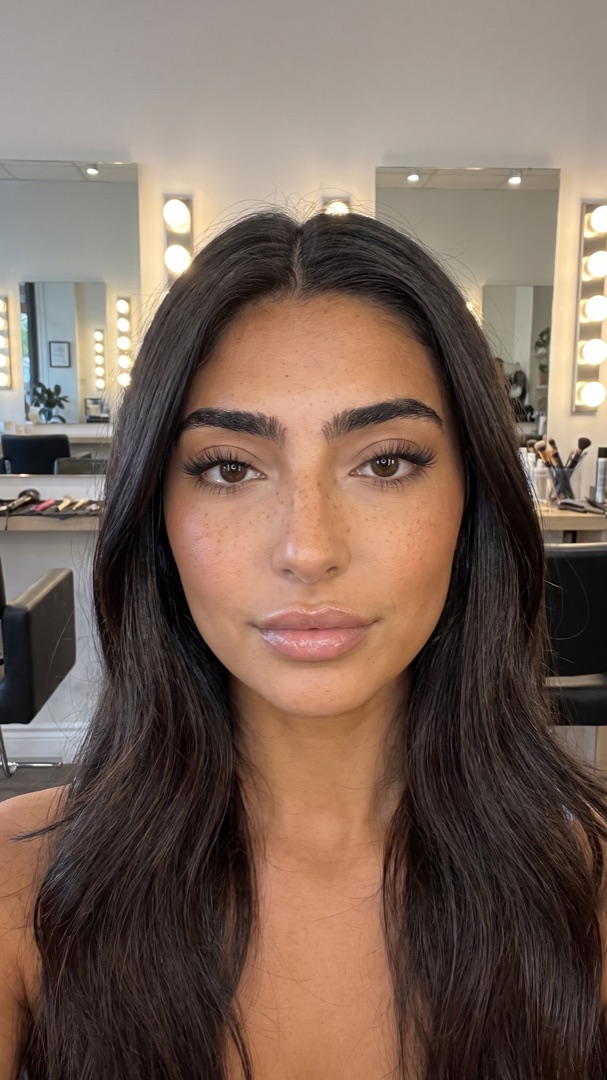
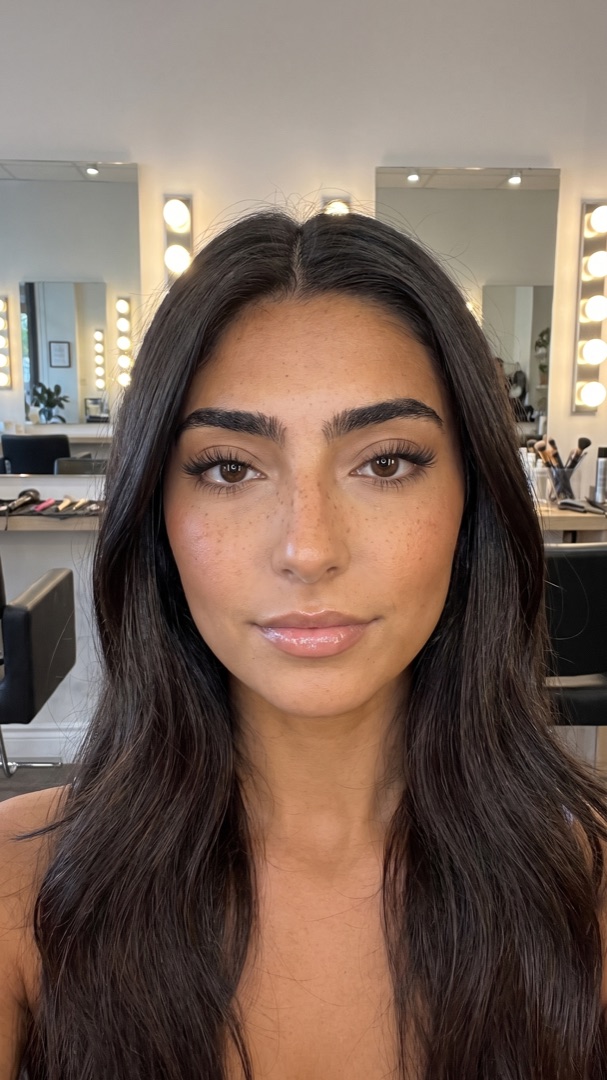
11 Lines (Glabellar Lines): What They Are and Why They Form
11 lines get their nickname from how two parallel creases between the eyebrows resemble the numeral 11. They come from the procerus and corrugator muscles, not the frontalis behind horizontal forehead lines. Here is the actual mechanism, and what helps.

11 lines, clinically called glabellar lines, are the vertical creases that form between your eyebrows when you frown, squint, or concentrate hard. The nickname comes from how two parallel lines resemble the numeral 11. They come from a different muscle group than the horizontal lines across the forehead, even though both live in the same general area.
Where exactly is the glabella?
The glabella is the small, smooth patch of skin between your eyebrows and just above the bridge of your nose - the Latin root means "hairless," since it's naturally free of eyebrow hair on most faces. Glabellar lines are named for sitting in exactly this spot, which is also why they're sometimes called frown lines or, less formally, 11 lines. It's a distinct zone from the broader forehead above it, even though both areas usually get discussed under the single heading "forehead wrinkles."
Which muscles actually cause 11 lines?
Two small muscles sit between your eyebrows and do the actual work. The procerus runs down the bridge of your nose and pulls the skin between your brows downward - it's what gives a frown its "scrunched" look. The corrugator supercilii sits above it, one on each side, and pulls both eyebrows in toward the center. Together, their repeated pull is what carves two parallel vertical lines rather than one.
That's a different mechanism from the one behind the horizontal lines higher up on the forehead, which come from the frontalis, the muscle that raises your eyebrows. We've covered that mechanism separately - the two areas are often treated as one "forehead" problem, but they're driven by different muscles moving in different directions, which is part of why a treatment aimed at one doesn't automatically do anything for the other.
Why two lines, not one?
Because the corrugator muscles are paired - left and right - each pulling its own eyebrow inward. Two muscles pulling toward the middle from opposite sides leaves two separate creases, with a flatter channel between them. Some people develop a third, fainter line in the middle from the procerus itself, which is where "11" occasionally becomes "111" in casual descriptions - still the same two muscle groups, just a stronger procerus contribution.
Why some people get deep 11 lines years before others
The muscles are small, but they're used constantly - every frown, every squint into the sun, every moment of concentration without realizing your brows have pulled together. That repetition is the main driver, and it has very little to do with age on its own. Two people the same age can be years apart in how visible their 11 lines are, simply because one of them frowns at a screen for eight hours a day and the other doesn't.
- Habitual frowning or concentrating - screen work, reading without the right glasses, or just a naturally expressive brow - repeats the same contraction thousands of times a year.
- Squinting in bright light engages the corrugator even when you're not frowning on purpose, which is why sunglasses matter here too.
- Thinner, less elastic skin in the glabella area (a natural part of collagen decline) means the fold stops fully releasing sooner for some people than others.
- Genetics set the starting point - skin thickness and elasticity in this specific area vary a lot between individuals, independent of lifestyle.
Dynamic 11 lines vs. static 11 lines
The same dynamic-versus-static distinction that applies to forehead wrinkles applies here. Dynamic 11 lines only appear when you actually frown or squint, and vanish completely once your face relaxes. Static lines are visible all the time, even with a neutral expression - that's the sign the crease has set rather than just showing up on demand. The earlier you catch it at the dynamic stage, the more room prevention has to work.
What actually helps with 11 lines?
The same habits that slow down horizontal forehead wrinkles apply here too, plus one option that's specific to this exact muscle group.
- Sunglasses outdoors remove one of the most common unconscious corrugator triggers - squinting into bright light - without you having to think about it.
- Daily sunscreen slows the collagen loss that makes the crease stick around, the same logic that applies to the rest of the forehead.
- Retinoids have reasonable evidence for stimulating collagen over months of consistent use, with modest, gradual results.
- Botox for glabellar lines is the most researched in-office option for this specific area, and it's a popular search because the procerus and corrugator are small, well-defined muscles that respond predictably to being temporarily relaxed. It's injected at a different site than Botox for horizontal forehead lines, since it's targeting a different muscle group entirely - that's worth knowing before assuming one treatment covers both.
None of this is medical advice. Whether any of it suits a specific face, and in what order, is a conversation for a licensed professional, not an article.
Can you preview what smoother 11 lines would look like on your own face?
LipsUp's forehead feature previews the forehead area as a whole on your own selfie - it isn't a zoomed-in simulation that isolates the glabella on its own, so think of it as a general picture of a smoother forehead rather than a precise 11-lines-only preview. It still gives you something concrete to look at before deciding anything: a computer-generated visualization of smoother forehead lines, done entirely on your device, with only the forehead area processed.
Always consult a licensed professional before any cosmetic treatment.
QUESTIONS
Frequently asked
What are 11 lines?
11 lines, or glabellar lines, are the vertical creases between the eyebrows caused by the procerus and corrugator muscles pulling the brows down and together, most often from frowning, squinting or concentrating.
Are 11 lines the same as forehead wrinkles?
No - 11 lines come from the procerus and corrugator muscles between the brows, while horizontal forehead lines come from the frontalis muscle higher up. They're often grouped together as 'forehead wrinkles' but the mechanisms, and often the treatment approach, are different.
What's the quickest thing that helps with 11 lines?
Wearing sunglasses outdoors to stop unconscious squinting and using daily sunscreen are the two lowest-effort habits with real evidence behind them. For an existing static line, Botox for glabellar lines is the most researched in-office option - a licensed professional can advise whether it's appropriate.